What brings the prospect in
A surname, family story, place of birth, or marriage can start an inquiry, but it does not show whether the relevant legal connection and documents extend through every required step.

How ByLineage uses generation-chain qualification to organize citizenship-by-descent, birth, and marriage inquiries for participating firms.
Citizenship interest often begins with one compelling family fact: an ancestor, a birthplace, a marriage, or a document kept across generations.
ByLineage turns that starting point into a structured generation chain. Paid articles or a quiz ask the prospect to name the target country, map the relevant links, and describe the evidence already available.
Intake then has the claimed basis, jurisdictions, documentary gaps, and research stage before the first call.
A surname, family story, place of birth, or marriage can start an inquiry, but it does not show whether the relevant legal connection and documents extend through every required step.
ByLineage applies a generation-chain approach across attractive citizenship systems, collecting the family links, decisive events, countries, and available evidence before comparing the inquiry with a firm's written criteria.
Curious, methodical, evidence-led, and clear about what is known or still missing
Paid native-advertising infomercials or direct quiz and form landing pages reach people researching ancestry, birth, or marriage as a possible citizenship connection.
The path explains that the relevant family or civil-status link must be traced step by step instead of inferred from a surname or a single record.
The questionnaire collects the target country, claimed basis, generation chain, jurisdictions, key events, available documents, and stage of research.
The record is compared with the countries, citizenship bases, generation limits, document context, languages, and exclusions in a participating firm's written lead profile.
Contact details, consent, and duplicate status are checked before a matching record is delivered with its ByLineage source and family-chain context attached.
The questions establish context for routing and intake. They do not replace the receiving lawyer's eligibility or merits review.
Is this the kind of immigration matter the brand and campaign were built to attract?
Do the destination, pathway context, timeline, and situation match the receiving firm's written criteria?
Are the contact details usable, consent recorded, and the prospect not duplicated elsewhere in the network?
This is an illustrative representative structure, not a real person's information.
The ByLineage concept makes the family chain visible. It helps the prospect organize ancestry, birth, or marriage facts while giving the receiving firm a bounded view of the claimed connection and documentary stage.
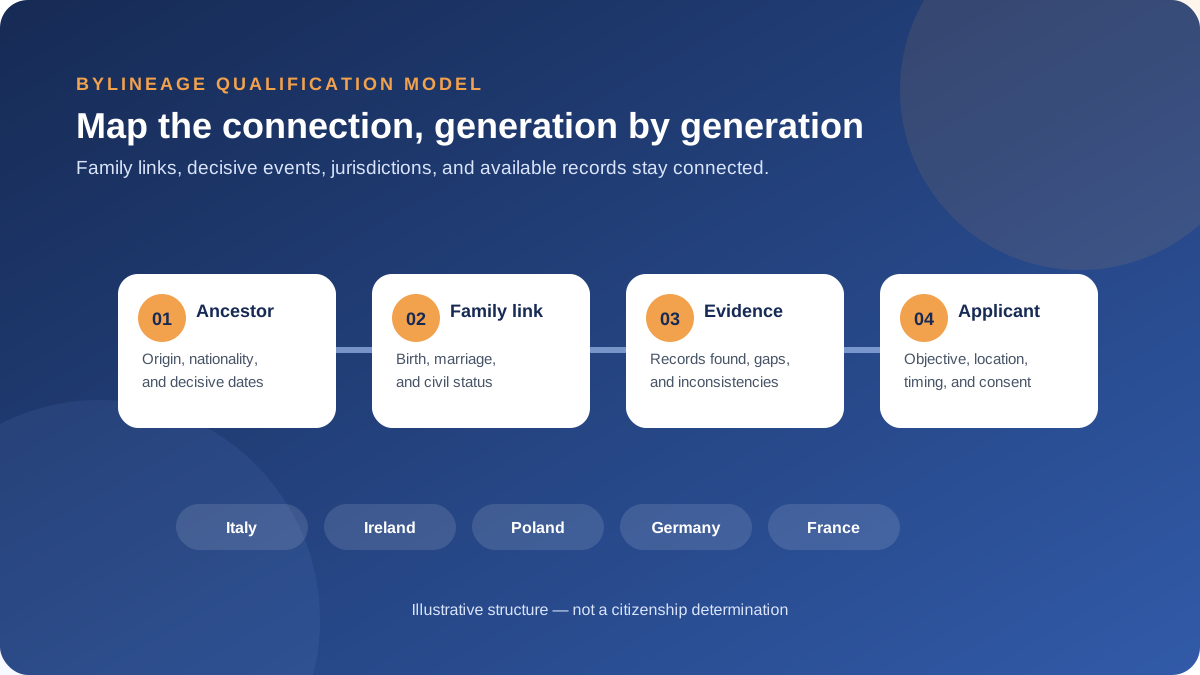
ByLineage covers citizenship connections to Italy, Ireland, Poland, Germany, and France. Prospects can live anywhere; family chains and records often cross borders. English, French, or Spanish on the pages; extra languages if the firm’s intake uses them.
The first question is a named citizenship connection: country, claimed basis, generation chain.
The target country, claimed basis, generation chain, jurisdictions, and evidence stage can be available before the first call.
Descent, birth, and marriage inquiries can be distinguished without treating one family fact as proof of eligibility.
The receiving firm can define accepted countries, connection types, documentary stages, languages, and exclusions in writing.
The ByLineage source and illustrative chain structure give intake a clear framework for follow-up questions.

Helps Spanish-speaking families assess the nationality-transmission chain and available evidence before paying for extensive documentary work.
Destination: France
Uses family-specific education and pathway questions for spouses, partners, parents, children, and other family-reunification situations.
Destination: Worldwide
A destination-specific brand for prospects researching a move, residence path, or related immigration service in France.
Destination: FranceTell us which countries, family connections, documentary stages, languages, and intake criteria your firm accepts.
